


If you’ve seen recent news stories about screwworms, you may be wondering whether your dog or cat is at risk.
The idea of a parasite living inside an animal’s wound can sound alarming—and understandably so. At 1st Pet Veterinary Centers, we believe that informed pet parents make better decisions for their pets. You can protect your pet by understanding what screwworms are, how they affect animals, and knowing what warning signs to watch for.
While screwworm infestations remain very rare in the United States, awareness is important, especially as veterinary and agricultural authorities continue monitoring the movement of these parasites in North America.
What is a Screwworm?
Despite the name, a screwworm is not actually a worm.
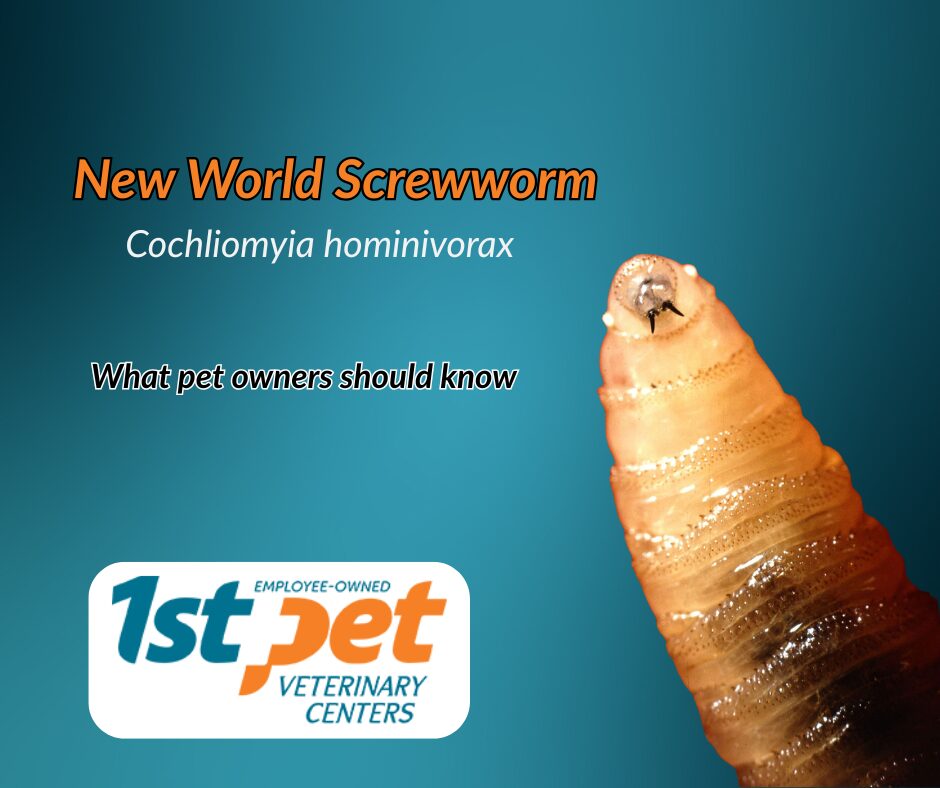
A screwworm is the larval stage (maggot) of the New World screwworm fly (Cochliomyia hominivorax).
Unlike many other fly larvae that feed on dead or decaying tissue, screwworm larvae feed on living tissue. Female flies lay eggs in cuts, open wounds, surgical sites, skin injuries, or other areas of open skin. Once the eggs hatch, the larvae burrow into the tissue and begin feeding.
As they grow, they can cause significant pain, tissue damage, and secondary infection.
Without treatment, the infestation can become severe and potentially life-threatening.
Why Are Veterinarians Concerned About Screwworms?
Historically, New World screwworm was a major problem throughout parts of the United States.
The United States government worked hard with farmers and veterinarians to eradicate (eliminate) screwworm for the US decades ago. However, as cases continued to occur in parts of Central and South America, and veterinary and agricultural authorities closely monitor any northward spread. That is how these new cases on the southern border of the United States were discovered so quickly and why they are taken so seriously.
The concern is not because every pet is suddenly at risk, but because reintroduction of the parasite along US souther border states could affect:
- Dogs
- Cats
- Livestock
- Wildlife
- Occasionally people
Early detection is essential for controlling outbreaks and protecting animal health.
How Do Pets Become Infected?
Screwworm flies are attracted to areas where tissue is exposed.
Examples include:
- Cuts and scrapes
- Bite wounds
- Surgical incisions
- Draining skin infections
- Ear wounds
- Umbilical cords in newborn animals
- Areas of chronic skin irritation
When an animal is infested by a screwworm larvae, the larvae hatch and start feeding very quickly. This allows screwworm infestations to become very serious within days.
This is one reason veterinarians emphasize prompt wound, even of minor wounds, and keeping pets with any open skin injury indoors.
Signs of Screwworm Infestation in Dogs and Cats
Early infestations can sometimes be difficult to recognize.
Pet parents may notice:
- A wound that appears larger than expected
- Persistent drainage from the wound or unexpected drainage from the skin or fur
- Foul odor from a wound or under the fur
- Swelling around a wound or under the fur
- Excessive licking or chewing at the skin
- Pain when the area is touched
- Redness or inflammation
- Visible movement within the wound
- Eating just a little or not at all
- Lethargy or excessivley tired
As the infestation progresses, tissue damage can become more extensive.
Some pet parents describe wounds that seem to worsen rapidly despite appearing relatively minor at first.
How Is a Screwworm Different from Typical Maggots?
Fortunately, not all maggots are screwworms.
Most fly larvae feed primarily on dead tissue or decaying material. This means that a wound is very advanced before a maggot gets involved. The more common maggot does not cause tissue damage. But an infestation is a sign that the wound needs care to help it heal.
Screwworm larvae are different because they actively invade and feed on healthy living tissue. Even minor cuts are at risk. Screwworm larvae can destroy healthy tissue quickly, causing pain and potentially death of the animal. This is what makes them particularly dangerous.
If you ever discover maggots in a wound, your pet should be evaluated by a veterinarian regardless of the type. A veterinarian can help identification the type of infestation and treat it properly.
What Should You Do If You Find Maggots in a Wound?
First, don’t panic.
Second, don’t attempt to treat the problem yourself.
Avoid:
- Pulling larvae out individually
- Applying harsh chemicals
- Using home or over-the-counter remedies that you can find at a pet store
- Attempting deep wound cleaning at home
Instead:
- Prevent your pet from licking the area
- Keep the wound as clean as possible
- Contact a veterinarian immediately
Prompt treatment significantly improves outcomes.
How Veterinarians Treat Screwworm Infestations
Treatment depends on the severity of the infestation and the amount of tissue involved.
Veterinary care may include:
Wound Evaluation
Your veterinarian will thoroughly examine the wound and assess the extent of tissue damage.
Removal of Larvae
All larvae must be removed carefully and completely.
Antiparasitic Medication
These medications kill any microscopic eggs or remaining larvae. Some of these prescription medications are long-acting and help prevent future screwworm infestations.
Wound Cleaning and Debridement
Damaged tissue may need to be cleaned or surgically removed to promote healing.
Pain Management
Infestations can be painful, and pain control is an important part of treatment.
Antibiotics and Supportive Care
Secondary infections are common and may require treatment.
Some pets may also need:
- Fluids
- Bandage care
- Follow-up wound management
Can Screwworms Be Prevented?
YES! Prevention focuses on reducing opportunities for flies to lay eggs.
Good preventive measures include:
Prescription Flea and Tick Medication
Most of these medications can prevent screwworms from surviving, even in open wounds.
Check Your Pet Regularly
Examine your dog or cat for:
- Cuts
- Scratches
- Bite wounds
- Skin infections
- Areas of irritation
Treat Wounds Promptly
Even small wounds should be cleaned immediately with water or sterile saline solution. Monitor wounds carefully and see a vet immediately if the wound starts to worsen.
Until you are able to see your veterinarian, keep your pet with a wound indoors. You may take your outside on a leash for bathroom breaks only.
Keep Surgical Incisions Clean
Follow all post-operative instructions provided by your veterinary team.
Address Skin Problems Early
Skin conditions that cause open sores may increase your pet’s risk, especially if they go outdoors.
Schedule Veterinary Care for Non-Healing Wounds
Any wound that isn’t improving deserves veterinary attention.
When Should You Call a Veterinarian?
Contact your veterinarian if you notice:
- Any wound containing maggots
- A wound with a strong odor
- Persistent drainage
- Swelling around an injury
- Tissue becomes more red, swollen, or painful.
- Excessive licking or chewing
- Unexplained pain or lethargy
The sooner the wound is evaluated, the easier treatment is likely to be.
Should Arizona Pet Parents Be Concerned?
At this time, the average Arizona pet parent does not need to panic about screwworms.
However, awareness is valuable.
Final Thoughts
While infestations remain uncommon in the United States, they can cause serious damage when they occur. Fortunately, prompt veterinary care is highly effective at identifying and treating affected wounds.
The best protection is simple vigilance:
- Check your pet regularly.
- Monitor wounds carefully.
- Seek veterinary care when something doesn’t look right.
At 1st Pet Veterinary Centers, we’re here to help whenever you have concerns about a wound, skin problem, or any unexpected change in your pet’s health.
If you’re unsure whether an injury needs medical attention, call us! Treating any wound earlier, whether or not it is screwworm, will help your pet feel better.