


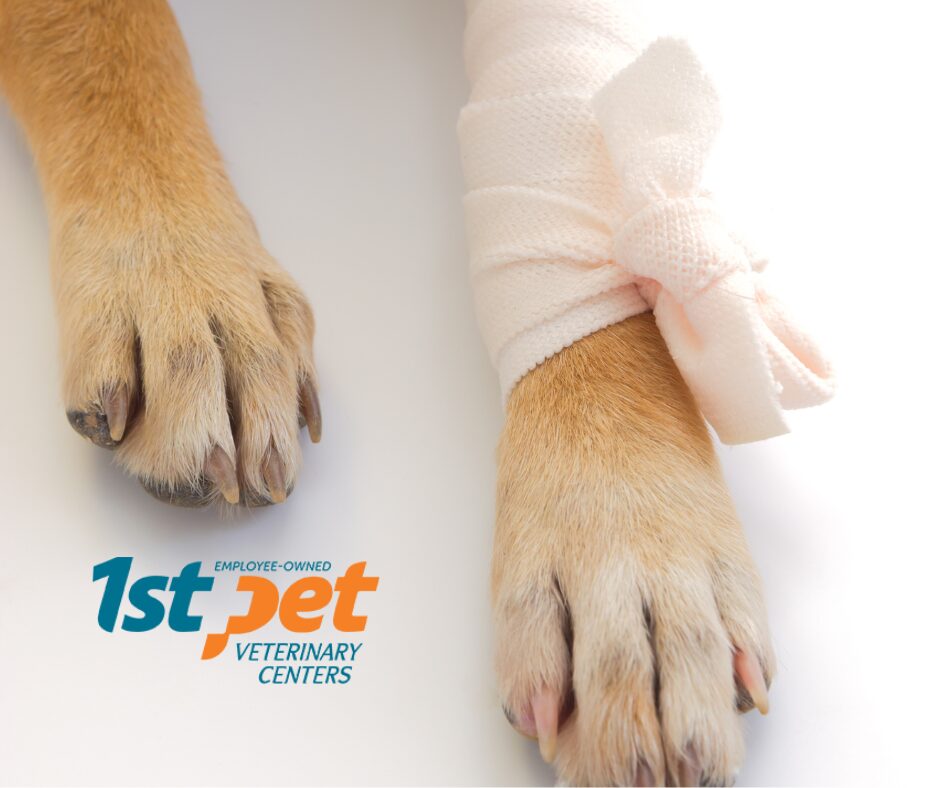
If you’re searching for dog joint pain or cat joint pain because your pet seems stiff, slow, or reluctant to move, it’s worth paying attention.
One of the most challenging aspects of joint pain is that pets rarely show it the way humans do. They don’t usually tell us they’re uncomfortable by crying or limping dramatically. Instead, they often communicate pain through subtle changes in movement, posture, activity level, or behavior.
Many owners assume these changes are simply part of getting older. While age can certainly play a role, mobility changes should never be dismissed as “just aging.” Pain, arthritis, injury, and other orthopedic conditions are common in both dogs and cats, and early intervention can make a significant difference in comfort, mobility, and quality of life.
At 1st Pet Veterinary Centers, we help pets with mobility concerns every day, from mild stiffness to complex orthopedic conditions. The earlier joint pain is recognized, the more options we often have to help.
What Does Joint Pain Look Like in Dogs and Cats?
Pets often hide pain surprisingly well. Because of this, owners frequently notice changes in routine long before they realize pain may be involved.
Common Signs of Dog Joint Pain
Dogs experiencing joint pain may show:
- Limping or favoring one leg
- Stiffness after resting
- Difficulty getting up from lying down
- Trouble jumping into the car
- Avoiding stairs
- Reduced interest in walks or playtime
- Slower movement during activities they once enjoyed
- Restlessness or difficulty getting comfortable
- Sensitivity when touched
- Shifting weight away from a painful limb
- Changes in posture, including a hunched back
Some of the earliest signs can be easy to miss. You may notice your dog changing positions frequently, taking longer to stand, or developing a subtle “hitch” in their gait during walks.
For many Arizona pet owners, these changes become most noticeable during morning walks, hikes, or trips to the park.
Common Signs of Cat Joint Pain
Cats tend to be even more subtle.
Unlike dogs, cats often adjust their behavior to avoid painful movements rather than openly showing discomfort.
Common signs include:
- Jumping less frequently
- Hesitating before jumping
- Choosing lower resting locations
- Difficulty climbing stairs
- Reduced grooming
- Matted fur, especially around the back and hips
- Trouble getting into or out of the litter box
- Sleeping more than usual
- Playing less
- Hiding more frequently
- Increased irritability
- Reduced interaction with family members
Many owners are surprised to learn that arthritis is extremely common in older cats, even though it often goes undiagnosed because the signs can be so subtle.
Common Causes of Joint Pain in Dogs and Cats
Joint pain can develop for many reasons, and identifying the underlying cause is essential to developing an effective treatment plan.
Osteoarthritis and Degenerative Joint Disease
Arthritis is one of the most common causes of chronic pain in both dogs and cats.
Osteoarthritis develops when the protective cartilage within a joint gradually breaks down. As the joint becomes less smooth, inflammation and discomfort increase.
Although arthritis is more common in senior pets, it can also occur in younger animals due to:
- Previous injuries
- Genetics
- Abnormal joint development
- Obesity
- Repetitive stress on joints
Arthritis is not simply a normal part of aging. It is a painful medical condition that often benefits from treatment.
For a deeper look at arthritis, visit:
Arthritis in Pets: Symptoms, Diagnosis and Treatment Options
Injury, Strain, or Trauma
Not all joint pain develops gradually.
Sudden pain can result from:
- Slipping on tile floors
- Falls
- Rough play
- Sprains
- Tendon injuries
- Muscle strains
If your pet suddenly begins limping or refuses to bear weight on a limb, prompt evaluation is recommended.
Cruciate Ligament Injuries in Dogs
Dogs can injure the cranial cruciate ligament (CCL), which serves a similar function to the ACL in people.
This ligament helps stabilize the knee. When it tears, dogs often experience:
- Sudden limping
- Pain
- Difficulty standing
- Reduced activity
Cruciate injuries are one of the most common causes of hind-limb lameness and frequently contribute to arthritis over time.
Developmental and Structural Joint Problems
Some pets are predisposed to orthopedic problems because of their anatomy or genetics.
Examples include:
- Hip dysplasia
- Elbow dysplasia
- Luxating patella
- Breed-related orthopedic conditions
These issues may begin early in life or become more noticeable as pets age.
Excess Weight and Reduced Muscle Support
Extra body weight places additional stress on joints that may already be painful.
At the same time, decreased activity can lead to muscle loss, reducing support around those joints and creating a cycle of worsening discomfort.
Maintaining a healthy weight is one of the most effective ways to support long-term joint health.
Post-Surgical, Chronic, or Age-Related Mobility Changes
Some pets experience mobility challenges after surgery, while others develop chronic conditions that affect movement over time.
Rehabilitation can often help improve comfort, strength, and function.
1st Pet Rehabilitation Therapy provides support for:
- Arthritis
- Chronic pain
- Post-surgical recovery
- Orthopedic injuries
- Obesity-related mobility issues
- Aging-related mobility changes
When Should You See a Vet for Joint Pain?
Schedule a Veterinary Appointment If:
- Limping lasts more than a day or two
- Your pet seems stiff after rest
- Activity level decreases
- Your dog avoids stairs, jumping, or car rides
- Your cat stops jumping or grooming normally
- Your pet appears painful when touched
- Appetite, mood, or bathroom habits change
- Symptoms improve but repeatedly return
Even mild changes can indicate a problem worth investigating.
Seek Urgent or Emergency Care If:
- Your pet suddenly cannot stand or walk
- They refuse to bear weight on a limb
- You see swelling, deformity, or bleeding
- Symptoms follow trauma or an accident
- Your pet is trembling, crying out, or unable to get comfortable
- A limb is being dragged
- There is sudden weakness or collapse
- Severe pain develops unexpectedly
You can review additional emergency warning signs here:
What to Expect at the Vet
When evaluating joint pain, our team focuses on both the symptoms and the underlying cause.
Your visit may include:
- Discussion of symptoms and timeline
- Review of activity changes
- Gait and mobility assessment
- Orthopedic examination
- Pain assessment
- X-rays or advanced imaging when appropriate
- Bloodwork if medications or systemic disease are concerns
If advanced orthopedic care is needed, our specialists can help guide next steps.
Treatment and Pet Joint Support Options
Veterinary Pain Management
Pain management is often an important component of treatment.
However, pain medications should only be used under veterinary supervision. Human pain medications can be dangerous—and sometimes fatal—for dogs and cats.
Learn more about our services:
Rehabilitation Therapy
Many pets benefit from rehabilitation therapies such as:
- Underwater treadmill therapy
- Therapeutic exercise
- Massage therapy
- Laser therapy
- Range-of-motion exercises
- Joint mobilization
- Electrical stimulation therapies
These treatments can improve comfort, strength, and mobility.
Weight Management and Activity Modification
Managing weight can significantly reduce stress on painful joints.
We often recommend:
- Consistent low-impact exercise
- Controlled activity plans
- Maintaining muscle mass
- Avoiding cycles of inactivity followed by intense exercise
Home Environment Support
Simple changes at home can help:
- Non-slip rugs
- Ramps or steps
- Supportive bedding
- Raised food and water dishes
- Low-entry litter boxes
- Keeping nails trimmed for traction
Supplements and Pet Joint Support
Some pets may benefit from veterinary-recommended supplements, nutritional adjustments, or other pet joint support strategies.
These approaches can support overall joint health but should not replace diagnosing and treating the source of pain.
Surgical Evaluation
Some orthopedic conditions require surgical treatment.
Examples include:
- Cruciate ligament injuries
- Severe joint instability
- Certain developmental orthopedic conditions
Our surgical team can evaluate whether surgery may provide the best outcome.
Why Early Evaluation Matters
One of the biggest misconceptions we see is the belief that slowing down is simply part of getting older.
The reality is that many pets are experiencing pain.
When pain goes untreated:
- Mobility often worsens
- Muscle loss develops
- Activity decreases
- Quality of life can decline
Early diagnosis gives us the best opportunity to create a personalized treatment plan and keep pets active and comfortable longer.
How 1st Pet Can Help
Whether your pet is showing mild stiffness or significant mobility challenges, our team is here to help.
With primary care veterinarians, rehabilitation services, pain management options, surgical expertise, urgent care, and emergency services, 1st Pet Veterinary Centers provides comprehensive support for pets experiencing joint pain.
Learn more about our services:
Frequently Asked Questions
How do I know if my dog has joint pain?
Common signs include limping, stiffness, reluctance to jump or climb stairs, slower movement, posture changes, and reduced activity levels.
What are the signs of cat joint pain?
Cats may jump less, groom less, avoid stairs, have litter box difficulties, sleep more, hide, or become less interactive.
Can I give my pet human pain medication?
No. Many human pain medications can be dangerous or toxic to dogs and cats. Always consult your veterinarian first.
Are joint supplements enough for dog or cat joint pain?
Usually not by themselves. Supplements may support joint health, but identifying and treating the underlying cause is important.
Can rehabilitation therapy help pets with joint pain?
Yes. Many pets with arthritis, orthopedic injuries, post-surgical needs, chronic pain, obesity, and age-related mobility changes benefit from rehabilitation therapy.
Final Thoughts
Joint pain can be surprisingly easy to miss—but it can have a major impact on your pet’s comfort and quality of life.
If your dog seems slower on walks, your cat has stopped jumping onto favorite perches, or something simply feels different, trust your instincts.
Pain isn’t always obvious, and it isn’t always “just aging.”
The sooner we identify the cause, the sooner we can help your pet feel better and stay active for years to come.