


Few moments are more stressful than realizing your pet may be hurt or suddenly ill.
Whether it’s a cut paw, vomiting, overheating, choking scare, or possible toxin exposure, emergencies rarely happen at convenient times—and in those first few minutes, many owners understandably panic and wonder:
“What should I do right now?”
The good news is that basic first aid can help stabilize your pet and potentially prevent a situation from becoming worse while you’re on the way to veterinary care.
At 1st Pet Veterinary Centers, we want pet owners to feel informed and prepared—not overwhelmed. First aid is not a replacement for veterinary treatment, but knowing a few safe steps can make a meaningful difference in an emergency.
First Things First: Stay Calm and Stay Safe
When pets are frightened or painful, even the gentlest dog or cat may react unpredictably.
Before helping your pet:
- Take a deep breath
- Approach slowly
- Speak calmly
- Avoid sudden movements
Your safety matters too. An injured or panicked pet may bite or scratch without meaning to.
If possible:
- Use a towel or blanket to gently wrap smaller pets
- Keep dogs leashed
- Minimize movement if injury is suspected
When to Seek Veterinary Care Immediately
Some emergencies should never be monitored at home.
Seek urgent or emergency care immediately if your pet has:
- Trouble breathing
- Collapse or loss of consciousness
- Seizures
- Severe bleeding
- Suspected poisoning
- Heatstroke symptoms
- A broken bone or major trauma
- Significant swelling around the face or throat
- Persistent vomiting or diarrhea with lethargy
In these situations, first aid should only focus on safely getting your pet to the veterinarian as quickly as possible.
Learn more here:
Emergency & Urgent Care
Common First Aid Situations and What to Do
Minor Cuts and Scrapes
Small cuts or abrasions are common, especially on paws.
What You Can Do
- Gently rinse the area with saline or clean water
- Remove visible debris carefully
- Apply light pressure if there is mild bleeding
- Prevent licking or chewing
Avoid using hydrogen peroxide repeatedly, as it can damage healthy tissue and slow healing.
Call Your Vet If:
- Bleeding won’t stop
- The wound is deep
- There is swelling, pus, or odor
- Your pet is limping or painful
Bleeding Nails
A torn or over-trimmed nail can bleed heavily and look dramatic.
What You Can Do
- Apply styptic powder, cornstarch, or flour
- Use gentle pressure for several minutes
- Keep your pet calm and quiet
Call Your Vet If:
- Bleeding continues beyond several minutes
- The nail is split near the base
- Your pet is in significant pain
Vomiting or Diarrhea
Occasional stomach upset can happen, but repeated symptoms can become serious quickly.
What You Can Do
- Offer small amounts of water
- Monitor closely for worsening symptoms
- Keep your pet rested and quiet
Call Your Vet If:
- Symptoms continue for more than a short period
- Blood is present
- Your pet becomes lethargic
- Your pet cannot keep water down
Puppies, kittens, and senior pets can become dehydrated very quickly.
Heatstroke or Overheating
Arizona heat can become dangerous for pets fast.
Early Signs Include:
- Heavy panting
- Excessive drooling
- Bright red gums
- Weakness or disorientation
What You Can Do
- Move your pet to a cool area immediately
- Apply cool (not ice-cold) water to paws, belly, and neck
- Offer small sips of cool water
- Use fans or air conditioning
Seek Veterinary Care Immediately
Even if your pet seems better, heatstroke can cause internal damage that is not immediately visible.
Suspected Poisoning
If your pet may have ingested:
- Human medication
- Chocolate
- Xylitol
- Toxic plants
- Cleaning products
- Pest control chemicals
do not wait for symptoms to appear.
What You Can Do
- Remove access to the toxin
- Bring the packaging if possible
- Call your veterinarian immediately
Do not induce vomiting unless specifically instructed by a veterinary professional.
Insect Bites or Stings
Bee stings and insect bites are common in Arizona.
Mild Reactions May Include:
- Small bumps
- Mild swelling
- Itching
Seek Immediate Care If You Notice:
- Facial swelling
- Trouble breathing
- Vomiting
- Collapse
Some allergic reactions escalate very quickly.
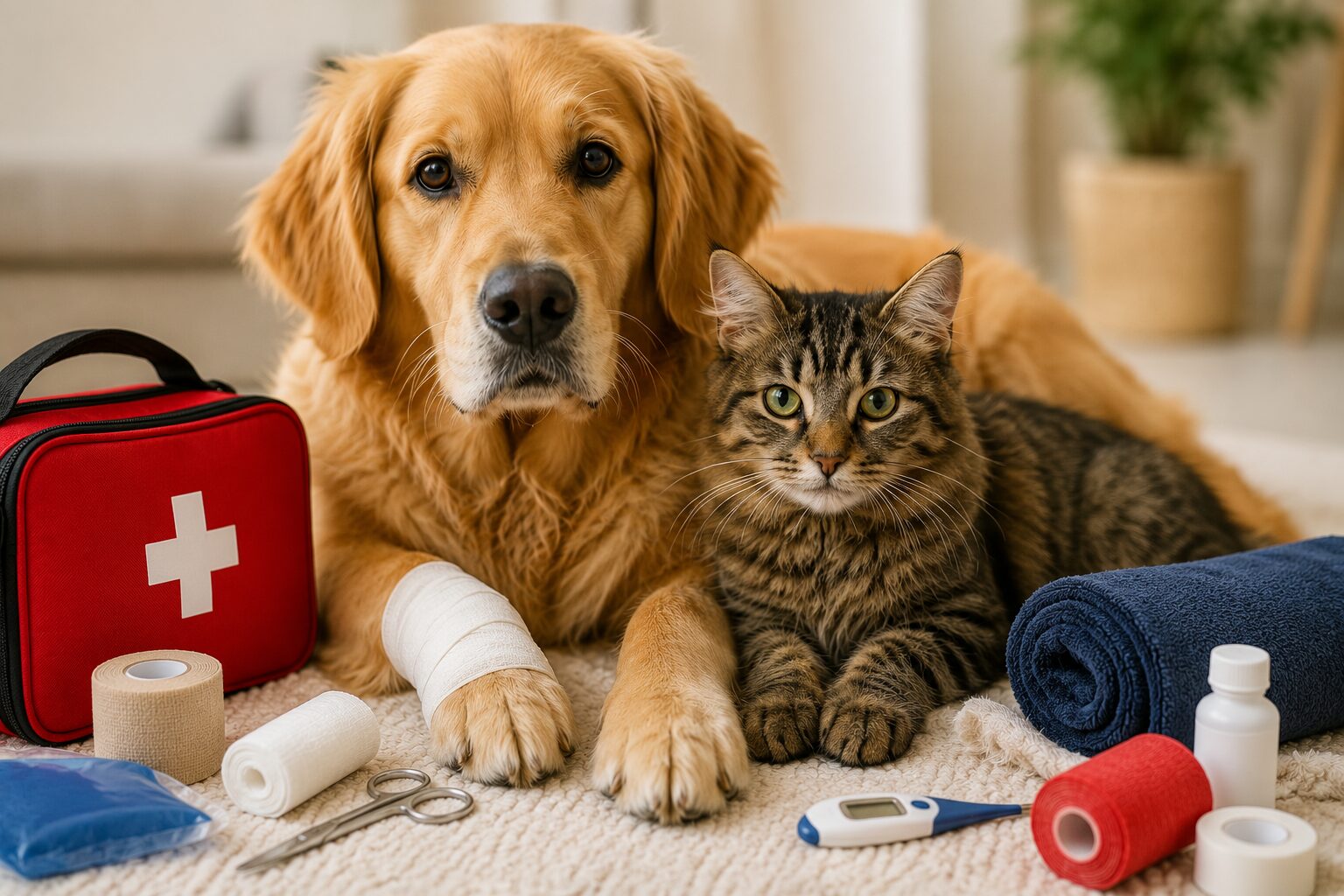
What Should Be in a Pet First Aid Kit?
A few simple supplies can make emergencies easier to manage.
Consider keeping:
- Gauze and non-stick bandages
- Saline solution
- Styptic powder
- Tweezers
- Towels or blankets
- Disposable gloves
- A digital thermometer
- Your veterinarian’s contact information
A basic kit at home and in the car can be extremely helpful.
What NOT to Do During Pet First Aid
One of the most important parts of first aid is avoiding accidental harm.
Avoid:
- Giving human medications unless instructed
- Using ice directly on injuries
- Forcing food or water into a struggling pet
- Delaying veterinary care during serious symptoms
If you are unsure, it’s always safest to call your veterinary team for guidance.
Why Quick Action Matters
Many emergencies become more treatable when addressed early.
Prompt action can:
- Reduce pain
- Prevent worsening injury
- Improve recovery chances
- Potentially save your pet’s life
At 1st Pet Veterinary Centers, we never want owners to feel like they are “overreacting” by calling. We would always rather help early than see a condition worsen at home.
Preparedness Makes Emergencies Less Overwhelming
No one expects emergencies to happen—but preparation makes them less frightening when they do.
Knowing a few basic first aid steps:
- Helps you stay calmer
- Helps your pet stay safer
- Helps you act more confidently while seeking care
And most importantly, you’re never alone in the process.
Not sure if your pet needs emergency care?
Contact 1st Pet Veterinary Centers right away. Our team is here to help guide you through urgent situations and provide compassionate care when your pet needs it most.