


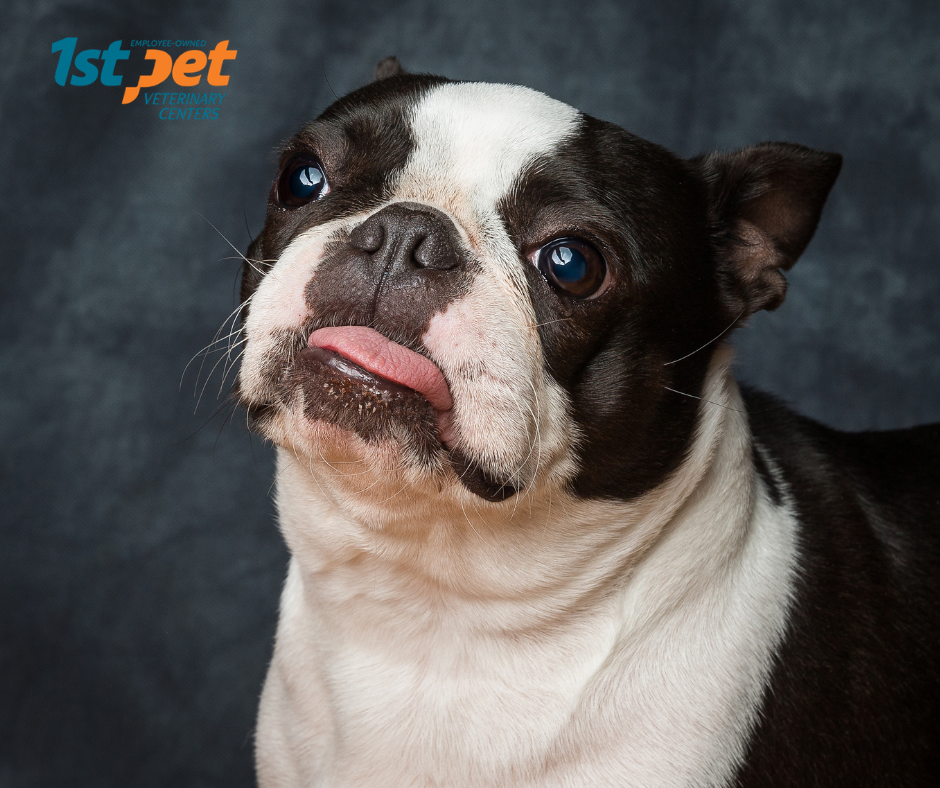
If you share your life with a Bulldog, Pug, Frenchie, Boston Terrier, Shih Tzu, Pekingese, or another flat-faced breed, you’ve probably heard the snoring and snorting described as “just part of the breed.”
While occasional snoring is normal, noisy breathing that is frequent or continues throughout the day can be a sign of a medical condition called BOAS.
So, what’s normal, what’s a myth, and when should you talk to a veterinarian? Here’s what caregivers of flat-faced dogs should know.
What Does BOAS Mean?
BOAS stands for Brachycephalic Obstructive Airway Syndrome.
It refers to a group of anatomical features common in flat-faced breeds that together can restrict airflow. These may include:
- A shortened muzzle
- Narrowed nostrils (stenotic nares)
- An elongated soft palate
- Everted laryngeal saccules
- In some dogs, a narrower windpipe
Because BOAS varies from dog to dog, symptoms—and the amount of breathing difficulty they cause—can vary as well.
Common Symptoms of BOAS
Signs of BOAS may include:
- Loud or labored breathing at rest or during activity
- Snoring, even while awake
- Snorting, gagging, or regurgitation, which can lead to aspiration pneumonia
- Reduced exercise tolerance
- Heat intolerance
- Disrupted sleep
- In more severe cases, fainting, collapse, or respiratory distress
If you’ve noticed these symptoms in your dog, an airway evaluation can help determine what’s causing them and whether treatment may help.
Why Do Flat-Faced Dogs Have Breathing Problems?
Flat-faced dogs have been bred to have very short noses and flat faces. However, the tissues inside their nose and throat are the same size as those of dogs with longer noses.
That extra tissue can obstruct the airway and make breathing more difficult, particularly during exercise, excitement, or hot weather.
Why Arizona Heat Matters
Dogs cool themselves primarily through panting, which moves air over the moist surfaces of their airways.
When that airway is already narrowed, panting is less effective at cooling the body. That puts flat-faced dogs at meaningfully higher risk of heat stress and heatstroke, particularly during Arizona summers.
As a dog tries to pant more to cool down, the tissues in the airway can begin to swell. That swelling can make the existing obstruction even worse.
If you hear your dog’s pant become noisier when they get hot, this is a sign that:
- They are heat stressed and need to be cooled off immediately.
- They should see a veterinarian for an airway evaluation.
BOAS: Myth Versus Fact
Myth: Snoring and snorting are just normal for the breed.
Fact: Snoring and snorting are common, but common isn’t the same as normal or healthy. These sounds are signs of restricted airflow.
Myth: If my dog can still play and eat, their breathing must be fine.
Fact: Dogs are very good at hiding breathing problems. They may seem happy and playful while their body is quietly working overtime to breathe.
Myth: Surgery is only for extreme cases.
Fact: If your dog is a noisy breather, intervening early means a better chance of successful surgery and easier breathing.
What Happens During a BOAS Consultation?
During an in-person or video consultation, we’ll discuss the symptoms you’ve noticed at home, examine your dog, and assess their overall breathing effort.
The veterinarian will likely want to see videos of your dog:
- Being active
- At rest
- Sleeping
Chest X-rays and lab tests may also be recommended to assess your dog’s overall health.
Only part of the airway assessment can happen while your dog is awake. To see the deeper structures of the throat, your veterinarian will need to examine your dog under anesthesia or deep sedation.
How Are BOAS Treatment Recommendations Made?
BOAS varies significantly between individual dogs, so treatment recommendations are tailored rather than standardized.
Some dogs can be managed with:
- Weight control
- Heat avoidance
- Close monitoring
Other dogs require surgery.
Depending on your dog’s anatomy, surgery may involve:
- Widening the nares (nostrils)
- Shortening the soft palate
- Removing everted laryngeal saccules
Your veterinarian will make recommendations based on your dog’s individual airway and overall health.
What Does Recovery After BOAS Surgery Involve?
After surgery:
- Dogs will stay in the hospital for 1–3 days.
- They are discharged home with pain relief, anti-nausea, and/or reflux medications.
- A cone collar (Elizabethan collar) should be worn at all times.
- Expect a recheck once or twice during the next 10–14 days.
- Some coughing, retching, and excessive swallowing can occur as throat swelling resolves.
For the next two weeks:
- Feed soft food.
- Keep bathroom trips short and use a leash with a harness rather than a collar.
- No running or jumping.
Following your dog’s discharge instructions carefully is an important part of a safe recovery.
How Much Does a BOAS Consultation Cost?
A BOAS consultation is $210.
Surgical costs vary depending on which procedures are recommended. We will provide a specific estimate after your dog’s in-person consultation.
Financing Options
We offer financing through CareCredit and Scratchpay. Our team is happy to talk through available options during your visit.
Frequently Asked Questions About BOAS
Is noisy breathing normal for my dog’s breed?
No. While many flat-faced dogs make noise when they breathe, noisy breathing is a sign that the airway is partially blocked. Dogs should be able to breathe quietly and comfortably.
Will my dog need surgery just because they’re a flat-faced breed?
No. Some dogs are managed without surgery. An examination is the only way to know what your dog needs.
Can BOAS get worse over time?
Yes. Persistent airway obstruction can cause swelling and progressive changes in the airway, making breathing more difficult as your dog ages.
How can I help my dog with BOAS at home?
Keep your dog in ideal body condition, as overweight dogs have a harder time breathing. Exercise during the coolest part of the day, avoid exercise in the heat, and use a harness instead of a collar.
Can BOAS be life-threatening?
Yes. Severe airway obstruction can lead to overheating, collapse, respiratory distress, and, in some cases, death if emergency treatment is not provided in time.
How do I know if it’s time to schedule a consultation?
If you’ve noticed any of the symptoms above—or you’re simply unsure—a consultation can give you clarity either way.
Breathe Easier With a Plan
Noisy breathing may be common in flat-faced dogs, but that doesn’t mean it should automatically be accepted as part of life with the breed.
Understanding your dog’s individual airway can help you make informed decisions about their comfort, activity, heat safety, and long-term care.
If you’re concerned about your dog’s breathing, request a BOAS consultation with 1st Pet Veterinary Centers. Our team can evaluate what’s happening, discuss your dog’s individual needs, and help you determine the next step.