Pet ICU and Critical Care
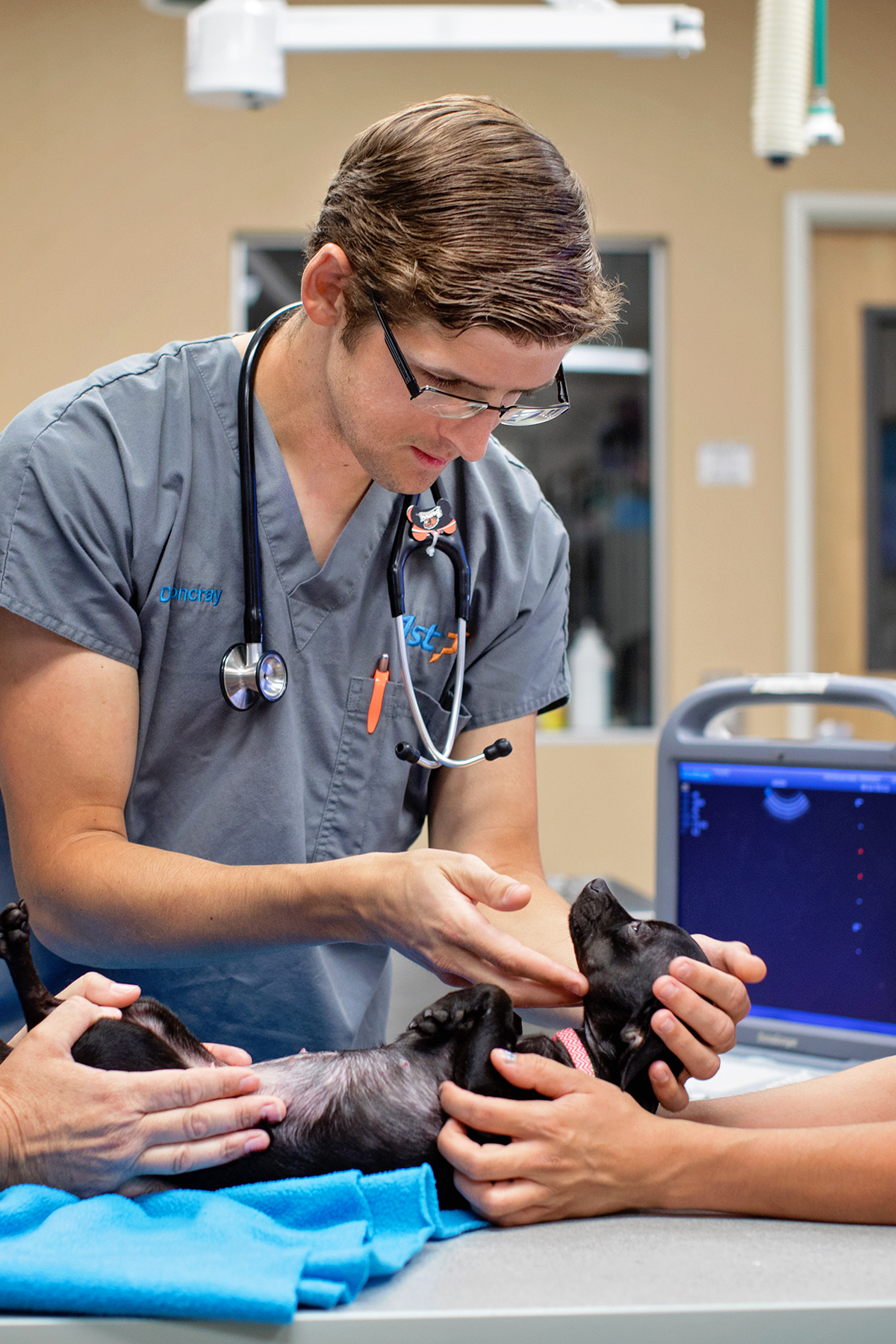
When every second counts, you need veterinary care you can trust. In our fully equipped pet ICU, your pet receives compassionate critical care to stabilize their condition, support recovery, and give them the best chance possible.
When Does a Dog or Cat Need Critical Care in the Phoenix Metro Area?
Critical care for dogs or cats is needed when an illness or injury is life-threatening or your pet’s condition is getting worse quickly.
Signs of critical ill health can include:
Difficulty breathing
Repeated vomiting or diarrhea
Collapse or loss of consciousness
Seizures
Severe injury or uncontrolled bleeding
Toxin or foreign object ingestion
Heatstroke
Severe lethargy or weakness
Pale or blue gums
Complications after surgery
Does My Pet Need Urgent Care, Emergency Care, Critical Care, or the ICU?
It can be hard to know what level of care your pet needs. This guide can help you understand the difference.
Urgent Care
For problems that should be treated soon but do not appear life-threatening, such as limping, minor wounds, ear infections, coughing, skin issues, constipation, or mild vomiting or diarrhea.
Emergency Care
For problems that should be treated soon but do not appear life-threatening, such as limping, minor wounds, ear infections, coughing, skin issues, constipation, or mild vomiting or diarrhea.
Critical Care
For problems that should be treated soon but do not appear life-threatening, such as limping, minor wounds, ear infections, coughing, skin issues, constipation, or mild vomiting or diarrhea.
Pet ICU
For problems that should be treated soon but do not appear life-threatening, such as limping, minor wounds, ear infections, coughing, skin issues, constipation, or mild vomiting or diarrhea.
Critical care and pet ICU treatment usually begin after emergency evaluation and stabilization or through a referral from another veterinarian.
What to Expect When Your Dog or Cat Is in Critical Care
Pre-Arrival Communication
If possible, call us while you are on the way. A brief description of what happened and the symptoms you are seeing can help our team prepare for your pet’s arrival.
Triage and Stabilization
When you arrive, our emergency team will quickly assess your pet and address the most urgent concerns first, such as difficulty breathing, severe bleeding, shock, or other life-threatening conditions. You may be asked to wait while we focus on stabilizing your pet. We know being separated can be difficult, and we will update you as soon as we can. If your pet is actively seizing or unresponsive, you may stay with them if you wish.
Diagnostics and Monitoring
Once your pet is stable, we may recommend bloodwork, ECG monitoring, imaging, or other tests to better understand what is happening. Your pet will be closely monitored, and we will keep you informed as we learn more.
Treatment Plan
We will explain what we have found, discuss the recommended treatment options, and answer your questions. As your pet’s condition changes, their treatment plan may be adjusted to provide the support they need.
Ongoing Care, Transfer, or Recovery
Depending on your pet’s condition, they may be able to continue recovering at home. If they need additional care, they may stay in our Fear Free cat and dog ICU for continued monitoring and treatment. Some pets may also need follow-up care with another 1st Pet service, a specialist, or our rehabilitation team.
How We Care for Your Pet During Critical Times
Every critically ill pet needs a different level of support. Depending on your pet’s condition, our critical care team may use advanced monitoring, diagnostics, pain management, nutritional support, and life-support treatments to stabilize them and guide the next steps in their care.
- Direct and indirect blood pressure monitoring
- Telemetric ECG
- Pulse oximetry
- Capnography
- Central venous pressure assessment
- Multimodal pain management
- Continuous rate infusions
- Epidural pain control
- Local and regional analgesia
- Diagnostic and therapeutic centesis, including pericardiocentesis
- Therapeutic endoscopy for foreign body removal
- Emergency ultrasound
- In-house testing, including CBC, serum chemistries, electrolytes, lactate, blood gas analysis, urinalysis, preliminary urine cultures, and coagulation panels
- Contrast-enhanced digital radiography
- Neurologica CereTom 8-slice CT imaging
- ECG analysis and treatment of abnormal heart rhythms
- Intravenous crystalloid, colloid, and electrolyte therapy
- Partial or total intravenous nutrition
- Feeding tube placement and individualized nutrition plans
- Oxygen administration and respiratory therapy
- Mechanical ventilation
- CPR, defibrillation, and post-resuscitation support
- Blood pressure support with vasopressor and inotropic medications
- Access to our in-house blood bank for dogs and cats
- Blood typing, cross-matching, and transfusion medicine
- Treatment for dehydration, shock, trauma, and concerns affecting blood flow to vital organs